
Studying the Word of God is not just for scholars, pastors, or Bible students. It doesn’t have to be scary or overwhelming! As disciples of Jesus, we all must learn how to study scripture. It’s the truth that helps us stand when we start to feel unsteady. It reveals the nature and characteristics of God, which then shares truth about who we are. We cannot define ourselves or God by what we think or how we feel. God and us can only be defined by Himself, and we find those definitions within His Word.
There is often a misconception that we must read a lot at once and that reading just a chapter is not enough. It’s not about how much we read, it’s about how often we read and what we do with what we read. That is how we feast on the Word. We enjoy it and we aim to understand it as it was intended. So this is your permission, as you study scripture, to start with a chapter, or even a verse! Trust me, there is a lot you can learn from just one verse in the Bible. This was a particular source of frustration for me and often discouraged me from doing any actual studying. Then someone told me even if I read a chapter and used my study tools to look into just one verse that stuck out to me, it would still make a difference in my walk with Jesus. I admit I was skeptical because I am often an “all or nothing” kind of person and if I couldn’t give as much time as I wanted or read as much as I wanted then I would put it off until I could. That logic is flawed, and I KNOW I am not the only one who does things like that! The person who told me I could just read a chapter was right. Between toddlers, kids homework, work projects, chores (hello, laundry), and figuring out dinner, sometimes all my brain can handle working through is one verse. The kindness of our Father in heaven is that He meets us where we show up to meet Him.
The second piece of discouragement for me was not having the right tools to study. There is so much information out there and we must be careful what we use. In this case, if you have a question about something you are reading that is breaking down scripture for you (i.e a Bible commentary) ask your pastor for some input. Trust me, as a pastor, we want to help make sure you have the right resources to study! Some of my favorite tools are at the end of this post. Make sure to check them out!
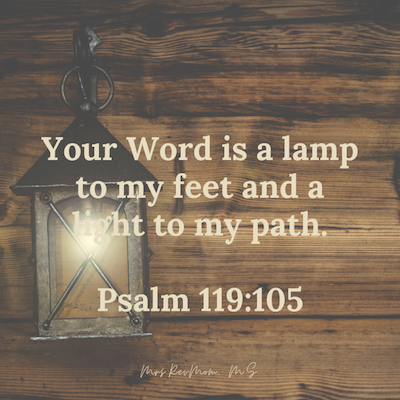
Your word is a lamp to my feet and a light to my path.
Psalm 119:105
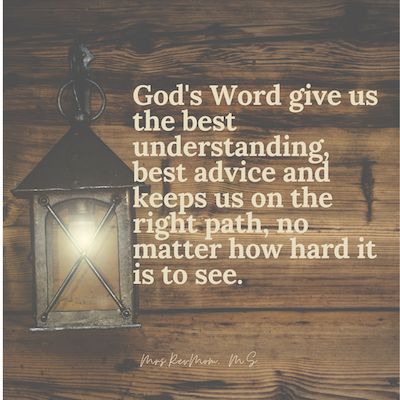
Life is hard, friends. Parenting is hard. It is easy to get discouraged. Life changes can cause unwanted disruptions and unwanted feelings. It is easy to get off course, distracted, and confused. Psalm 119:105 tells us that God’s Word “is a lamp to my feet and a light to my path.” His Word gives us the best understanding, best advice and keeps us on the right path, no matter how hard it is to see. We often complain that we don’t know what God is asking us to do or where He is but we rarely open our Bibles to find out. There is a wealth of understanding within those pages and they are illuminated through the Holy Spirit, who gives us understanding. When we study what the intended purpose of the scripture is saying we receive the wisdom and confidence to walk out the lives God is calling us to.
As you begin to study the word you will need your Bible (I am partial to the ESV), a learning resource (see below for some options), a desiring heart, and something to take notes. I typically will choose to study a specific verse or section of verses based off of my devotional reading (my regular reading time) that piques my interest, confuses me, or I have more questions about. I will use the tools below to dive into the context of the Word and learn more about what God is trying to teach me.
Where are you going to start today? Here are some tools and terms to get you started:
- Blueletterbible.org – This is a free site that you can use to study. I love using this site because it is fairly user friendly and offers a lot of great features. You can type in any scripture and click on “tools” to see the original Greek or Hebrew used, hear how the word is said, see where it used in other places of the Bible, as well view commentaries, dictionaries, and multiple translations of the Bible.
- Logos – This is a software that you can get from logos.com. This is an amazing study tool but cost some money. You can get a standard starter pack (which honestly for the home study is MORE than enough) for about $100, sometimes you can catch it on sale for $50. You can add on resources as you want. Logos can be pretty pricey, but if you ever want to get serious about your study and are comfortable spending $50-$100, this is definitely the route to take!
- How to Study the Bible for All It’s Worth – Gordon Fee & Douglas Stuart – Read this book and get a college credit (just kidding.) But, it is a basic book for Bible college students and just about anyone entering into ministry leadership. Great book to get you started!
- ESV Study Bible – By far my favorite study Bible!
- Commentary – A written explanation and/or interpretation of the scripture. Gives verse by verse context. I recommend this one.
- Bible Dictionary – this will help you with all those Bible words that are hard to read or understand! Another early deterrent to me reading, never-mind studying, my Bible! I have had a Zondervan Bible Dictionary since I was a teenager, but I honestly often use my logos or blueletterbible.org now.
- Bible Atlas – A tool that shows historical, geographical, culture, archaeological, and topographical perspectives. I’m a nerd when it comes to getting to look through these!
- Eisegesis vs Exegesis – big words, I know. But don’t tune out on me. These are super important to understand and will help keep you in check as you study your Bible. To eisegete (eisegesis) the Bible means to put your own ideas and experiences into what you are reading. This often leads us to misinterpret the text, having it say something that it is not actually saying. We have to be careful that we never manipulate scripture to say what we want it to say. That is why we study, so we can exegete (exegesis) the text. To exegete the text means to interpret the text as it was intended. That means learning the who, what, where, when, and whys. When you study the text make sure you find out who is writing (if it is known), to whom it was written, what is being intended or discussed – any special circumstances happening, when is it being written (history and cultural norms are important for understanding context,) why are they writing it (like in 1 Corinthians where they asked Pauls advice on issues they were facing as a church and 1 Corinthians is his response). Being able to answer these questions will better help you understand what you are reading and how it applies in your relationships with God and with others.
Let me leave you with this. The more you study and seek to understand the Word the more you are going to fall in love with God. When you fall in love with God, He becomes the most consistent presence in your life. Reliable, unwavering, dependable. We need that. The truth you learn as you study is going to deflect every lie of the enemy and aid you in standing when the storms come. I encourage you to prioritize this time in your Bibles. Your families need you to be who God created you to be. Your coworkers, your friends, and your disciples, need you to be who God created you to be.
I would love to answer any questions you may have or hear about any other tools that you love to use when you study. Leave a comment below or send a message on our contact page!


Thank you for doing this. You are an encourager. I appreciate the resources you have provided is most helpful!
LikeLike
Nice article the words of God are the base of humoan being
LikeLike